
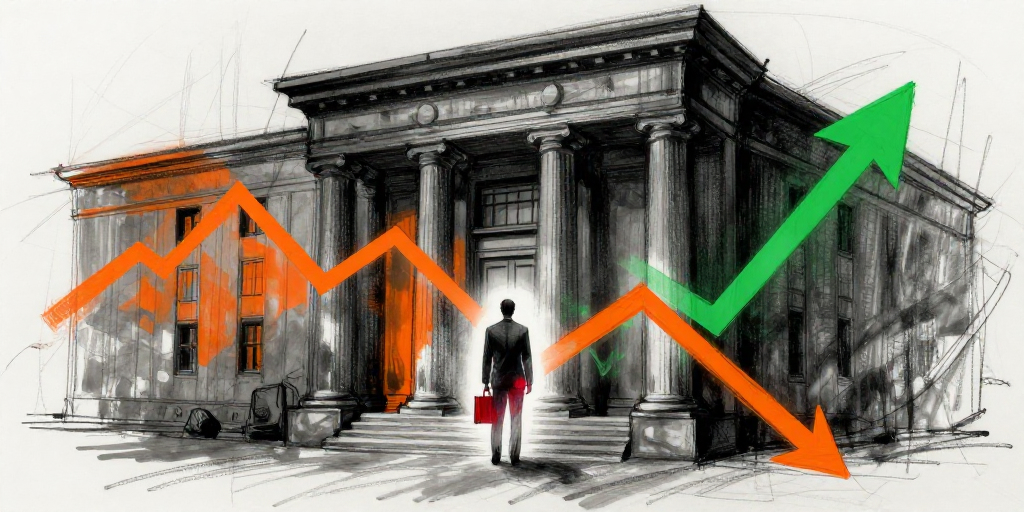
Insider Buying Spikes Amid a Volatile Market
Recent filings show Bharucha Kaizad exercising 5,000 employee‑stock options at an exercise price of $6.80 on April 17, 2026, and simultaneously purchasing an equal number of equity shares for the same price. This dual transaction, executed at a market price of $799.90, suggests that Kaizad views the bank’s current valuation as attractive despite the steep 97 % year‑to‑date decline. The buy‑sell pattern—options sold in the days preceding the purchase—indicates a strategy that locks in gains from option gains while accumulating long‑term equity exposure.
Implications for Investors
The timing of Kaizad’s trade aligns with a broader wave of insider buying by senior bankers such as Group Head Nirav Vimal, who added 51,800 shares on April 16. When a cohort of top executives increases holdings, it can signal confidence in the company’s recovery trajectory, particularly in a sector where market sentiment is often driven by macro‑economic cycles. However, the sharp price drop and a 52‑week low just 35 days earlier temper enthusiasm. Investors should weigh Kaizad’s insider activity against the bank’s liquidity profile, regulatory headwinds in India, and the impending shareholder vote on the 2022 Employee Stock Incentive Plan, which could alter future dilution dynamics.
Kaizad’s Transactional Profile
Kaizad’s recent activity demonstrates a consistent pattern of exercising options and converting them into equity shares. Over the past month, he has sold options in March (6,000 and 10,000 units) and purchased an equivalent number of shares, maintaining a post‑transaction holding of roughly 4.6 million shares. The ratio of options sold to shares bought is roughly 1:1, suggesting a disciplined approach to converting derivative exposure into tangible equity. Historically, Kaizad’s transactions have been executed at a fixed exercise price of $6.80, matching the current market price, which indicates a preference for exercising when the intrinsic value is low and the market price is high.
Market Context and Forward Look
HDFC Bank’s stock has suffered a dramatic annual decline, falling from a 52‑week high of ₹1,020.50 to ₹726.65 at the low point on April 1. Despite this, the bank’s price‑earnings ratio of 16.45 remains within a reasonable range for the banking sector, and the market cap exceeds ₹12 trillion. The recent insider purchases may be interpreted as a signal that senior management believes the bank’s fundamentals—such as diversified revenue streams across retail, wholesale, and treasury—are poised for a rebound once macro‑economic conditions improve. Nonetheless, the pending shareholder vote on extending the Employee Stock Incentive Plan could affect future share dilution, and any regulatory changes in India’s banking framework could impact earnings.
Bottom Line
Kaizad Kaizad’s recent buy‑sell activity—paired with a broader insider buying trend—provides a cautiously optimistic signal for HDFC Bank investors. While the stock remains deeply undervalued on a price‑earnings basis, the insider confidence hints at an expected turnaround. Traders and long‑term holders should monitor the outcome of the employee incentive plan vote, the bank’s quarterly earnings reports, and any macro‑economic shifts that could influence the Indian banking sector’s recovery trajectory.
| Date | Owner | Transaction Type | Shares | Price per Share | Security |
|---|---|---|---|---|---|
| 2026-04-17 | Bharucha Kaizad () | Buy | 5,000.00 | 6.80 | Equity Shares |
| 2026-04-17 | Bharucha Kaizad () | Sell | 5,000.00 | 6.80 | Employee Stock Option (Right to Buy) |